Global Japanese Sushi Rolls
Highlighted under: World Cuisine | Global Cooking
When I first tried making sushi at home, I was surprised by how simple it could be yet so delicious. With fresh ingredients and a bit of practice, I found a method that consistently yields perfect rolls every time. This recipe combines traditional Japanese techniques with global flavors, offering endless possibilities for customization. I love serving these sushi rolls at gatherings, as they're always a crowd-pleaser and allow everyone to enjoy the experience of rolling their own sushi just the way they like it.
I remember the excitement of preparing my first sushi rolls at a friend’s dinner party. We selected fresh ingredients and experimented with flavors, like incorporating avocado and spicy mayo. It was fun to see everyone enthusiastically trying different combinations and rolling their own sushi.
This experience taught me the joy of tailoring your sushi to personal tastes and how simple techniques can lead to beautifully crafted rolls. My favorite trick is to use a bamboo mat to ensure even tightness without squishing the fillings, resulting in a perfect bite every time.
Why You'll Love This Recipe
- Unique flavor combinations that entertain your palate
- Customizable rolls based on your favorite ingredients
- A fun culinary experience perfect for gatherings
Mastering Sushi Rice
The quality of sushi rolls largely depends on your sushi rice. It’s important to choose a short-grain sushi rice for the perfect sticky texture. After rinsing the rice, letting it soak for 30 minutes helps achieve even cooking. When cooking, use medium heat initially to bring the pot to a boil, then reduce to low and steam for approximately 15 minutes. Once cooked, the rice should be glossy and slightly sticky, indicating it’s ready for rolling.
Incorporating the vinegar mixture is a key step as it not only flavors the rice but also helps with the stickiness. It’s best to fold the mixture into the rice gently with a spatula; you don’t want to mash the grains. Allowing the rice to cool to room temperature is crucial before assembling the rolls; this prevents the nori from becoming soggy, maintaining that signature crispiness.
Roll Like a Pro
When assembling your sushi rolls, the distribution of fillings is crucial for a balanced bite. Aim to use about 1 cup of sushi rice per roll and keep your fillings no wider than the rice. This prevents the roll from bursting during slicing. Experiment with different vegetables such as bell peppers or even fruits like mango for a unique twist—just remember to slice them thinly for easy rolling.
A bamboo mat is a real game-changer; it helps achieve an even and tight roll. When rolling, use your fingertips to apply gentle pressure and keep it snug without squeezing too hard, which could cause the roll to break apart. Practice makes perfect! Each roll should look even and nice; if it doesn’t, adjust your technique with less filling for a tighter roll.
Serving and Variations
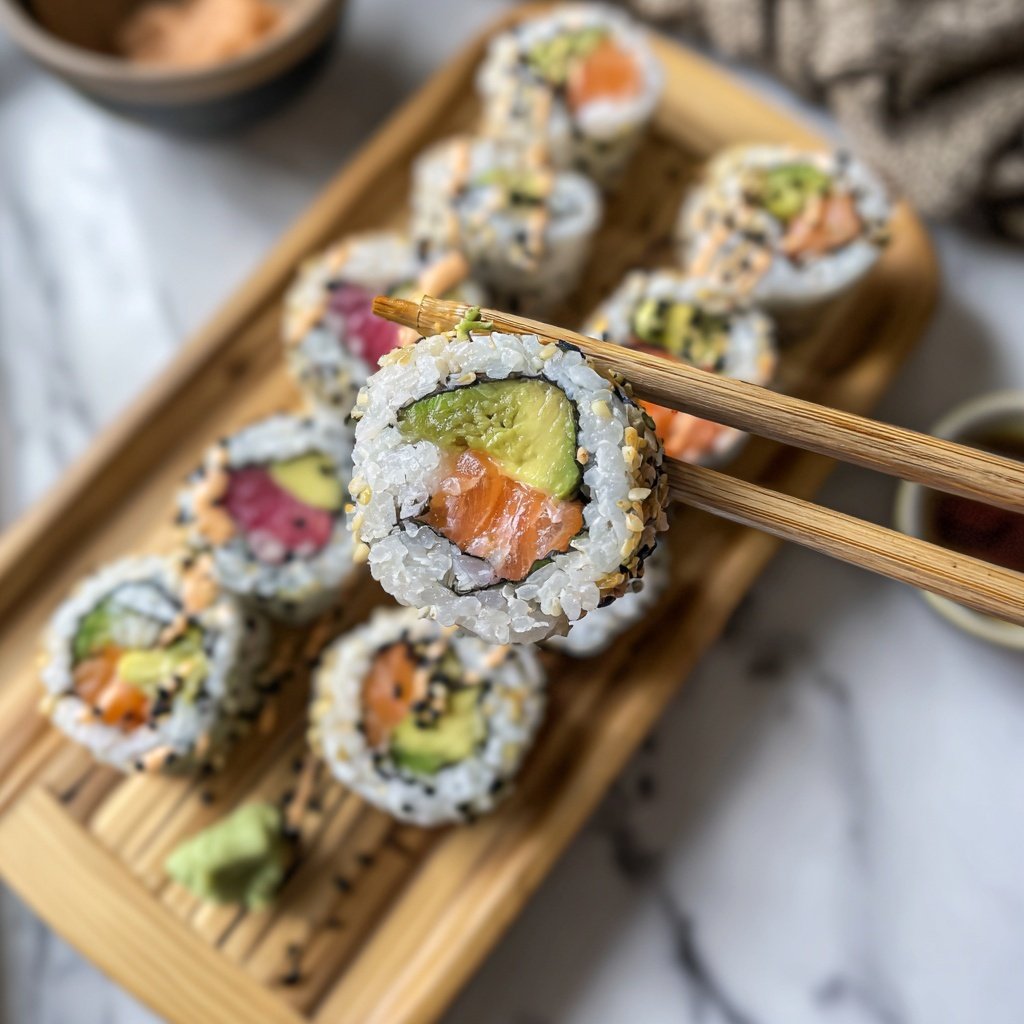
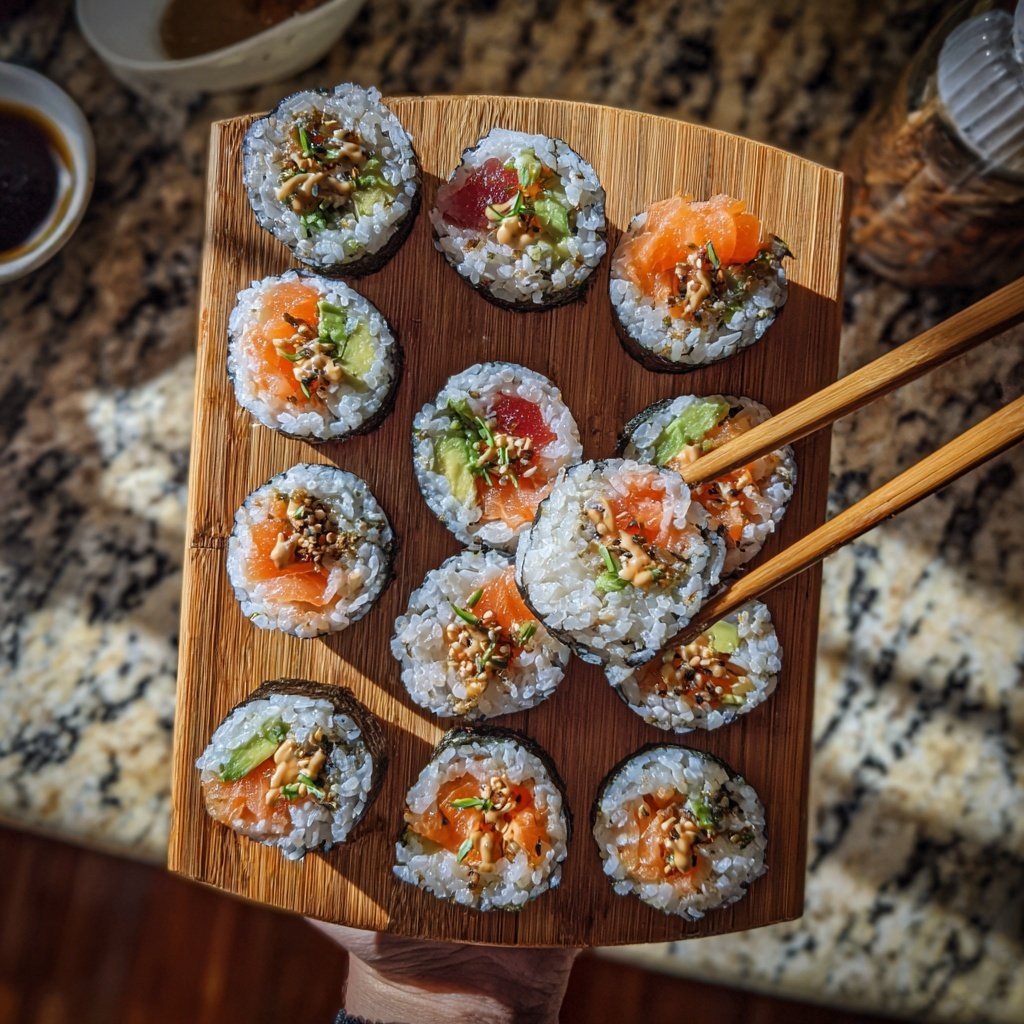
Presentation is key when serving sushi. Position your sliced rolls on a vibrant plate or sushi board, and consider garnishing with microgreens or sesame seeds for an aesthetic touch. Having a variety of sauces like soy sauce and spicy mayo allows guests to customize their experience. It’s also a fun idea to create a dipping station where everyone can add their preferred condiments.
For a more adventurous take, try incorporating international ingredients. Substituting traditional fillings with grilled chicken or marinated tofu makes the dish suitable for various dietary preferences. Additionally, you can serve your sushi rolls with a side of kimchi or pickled vegetables for an unexpected twist that complements the flavors beautifully.
Ingredients
Ingredients
Sushi Rice
- 2 cups sushi rice
- 2 ½ cups water
- ¼ cup rice vinegar
- 2 tablespoons sugar
- 1 teaspoon salt
Protein & Fillings
- 200g fresh salmon, thinly sliced
- 200g cucumber, julienned
- 1 avocado, sliced
- 100g crab meat (or imitation)
- 4 sheets nori
Sauces
- Soy sauce for serving
- Spicy mayo (mix mayo and sriracha)
- Wasabi and pickled ginger (optional)
Instructions
Instructions
Prepare Sushi Rice
Rinse the sushi rice under cold water until the water runs clear. In a rice cooker or pot, combine rinsed rice and water and cook until tender. Once cooked, let it sit covered for 10 minutes. In a small bowl, mix rice vinegar, sugar, and salt until dissolved. Fold into the rice gently and let it cool to room temperature.
Assemble the Rolls
Lay a sheet of nori on a bamboo mat, shiny side down. Wet your hands and grab a handful of sushi rice, pressing it onto the nori, leaving about an inch at the top. Layer your protein and fillings, like salmon, cucumber, avocado, and crab, in the middle of the rice. Be careful not to overfill!
Roll the Sushi
Using the bamboo mat, start rolling the nori away from you, tucking it over the fillings. Apply gentle pressure to keep the roll tight. As you reach the bare edge of the nori, wet it with a little water to seal the roll.
Slice and Serve
Using a sharp knife, slice the roll into bite-sized pieces. Wipe the knife with a damp cloth between cuts for clean edges. Serve with soy sauce, spicy mayo, wasabi, and pickled ginger.
Pro Tips
- Experiment with different fillings and toppings to create your signature rolls! Don't hesitate to try seasonal ingredients or even fruits for a unique twist.
Storage and Make-Ahead Tips
Sushi is best enjoyed fresh, but if you need to make it ahead of time, consider preparing the rice and fillings separately. Store sushi rice in an airtight container at room temperature, and use it within a few hours to maintain its texture. For fillings, fresh vegetables can be prepped in advance; just keep them in the refrigerator to stay crisp and vibrant.
If you have leftover rolls, they can be wrapped tightly in plastic wrap and stored in the fridge for up to 24 hours. However, note that the nori may lose its crunch. To refresh them, consider quickly toasting the roll in a dry skillet for about 30 seconds on each side before serving to regain some crispness.
Troubleshooting Tips
If your sushi rice turns out too dry or crumbly, it might not have absorbed enough water during cooking. This can happen if the rice is rinsed too quickly or if it's cooked at too high a heat. To fix this, try steaming the rice with a bit of extra water over low heat in a sealed pot for a few minutes until it softens up. Remember, rice like sushi calls for the right balance of water—aim for a 1:1.25 rice-to-water ratio.
Another common issue is difficulty rolling the sushi. If the nori is too dry, it can crack or tear; consider lightly toasting it for a few seconds on each side to make it more pliable. If your sushi rolls are falling apart when cut, check your filling ratios—using too much can lead to instability. Practice maintaining a tighter roll and avoid overstuffing for the best results.
Questions About Recipes
→ Can I use brown rice instead of white sushi rice?
Yes, but it will result in a different texture and flavor. Brown rice is more nutritious and adds a nutty taste.
→ How do I store leftover sushi?
It's best to consume sushi fresh. If you must store it, wrap it tightly in plastic wrap and refrigerate for up to one day.
→ What if I can't find sushi-grade fish?
You can use cooked seafood, vegetables, or even tofu as alternatives for sushi fillings.
→ Can I make sushi without a bamboo mat?
Yes, you can use parchment paper or simply roll them by hand, though it might be harder to keep the roll tight.
Global Japanese Sushi Rolls
Created by: The Chefmarcocooks Team
Recipe Type: World Cuisine | Global Cooking
Skill Level: Beginner
Final Quantity: 4 rolls
What You'll Need
Sushi Rice
- 2 cups sushi rice
- 2 ½ cups water
- ¼ cup rice vinegar
- 2 tablespoons sugar
- 1 teaspoon salt
Protein & Fillings
- 200g fresh salmon, thinly sliced
- 200g cucumber, julienned
- 1 avocado, sliced
- 100g crab meat (or imitation)
- 4 sheets nori
Sauces
- Soy sauce for serving
- Spicy mayo (mix mayo and sriracha)
- Wasabi and pickled ginger (optional)
How-To Steps
Rinse the sushi rice under cold water until the water runs clear. In a rice cooker or pot, combine rinsed rice and water and cook until tender. Once cooked, let it sit covered for 10 minutes. In a small bowl, mix rice vinegar, sugar, and salt until dissolved. Fold into the rice gently and let it cool to room temperature.
Lay a sheet of nori on a bamboo mat, shiny side down. Wet your hands and grab a handful of sushi rice, pressing it onto the nori, leaving about an inch at the top. Layer your protein and fillings, like salmon, cucumber, avocado, and crab, in the middle of the rice. Be careful not to overfill!
Using the bamboo mat, start rolling the nori away from you, tucking it over the fillings. Apply gentle pressure to keep the roll tight. As you reach the bare edge of the nori, wet it with a little water to seal the roll.
Using a sharp knife, slice the roll into bite-sized pieces. Wipe the knife with a damp cloth between cuts for clean edges. Serve with soy sauce, spicy mayo, wasabi, and pickled ginger.
Extra Tips
- Experiment with different fillings and toppings to create your signature rolls! Don't hesitate to try seasonal ingredients or even fruits for a unique twist.
Nutritional Breakdown (Per Serving)
- Calories: 250 kcal
- Total Fat: 8g
- Saturated Fat: 1g
- Cholesterol: 30mg
- Sodium: 50mg
- Total Carbohydrates: 36g
- Dietary Fiber: 2g
- Sugars: 1g
- Protein: 8g