Candied Orange Peel with Brown Sugar
Highlighted under: Easy Desserts | Simple Baking
I love making homemade treats, and this Candied Orange Peel with Brown Sugar is one of my favorites. The sweet, sticky texture paired with the vibrant citrus flavor is simply irresistible. Not only does it make a delightful candy, but it also transforms my kitchen into a fragrant citrus paradise. I enjoy using them as a garnish for desserts or just munching on them as a sweet snack. It's a fun way to use up orange peels and create something delicious!
Making candied orange peel was a bit of a revelation for me. I tried several methods before I found the perfect balance of sugar and patience. After experimenting, I'd say simmering the peels slowly in the sugar syrup is key because it allows them to absorb that delicious sweetness without becoming too chewy.
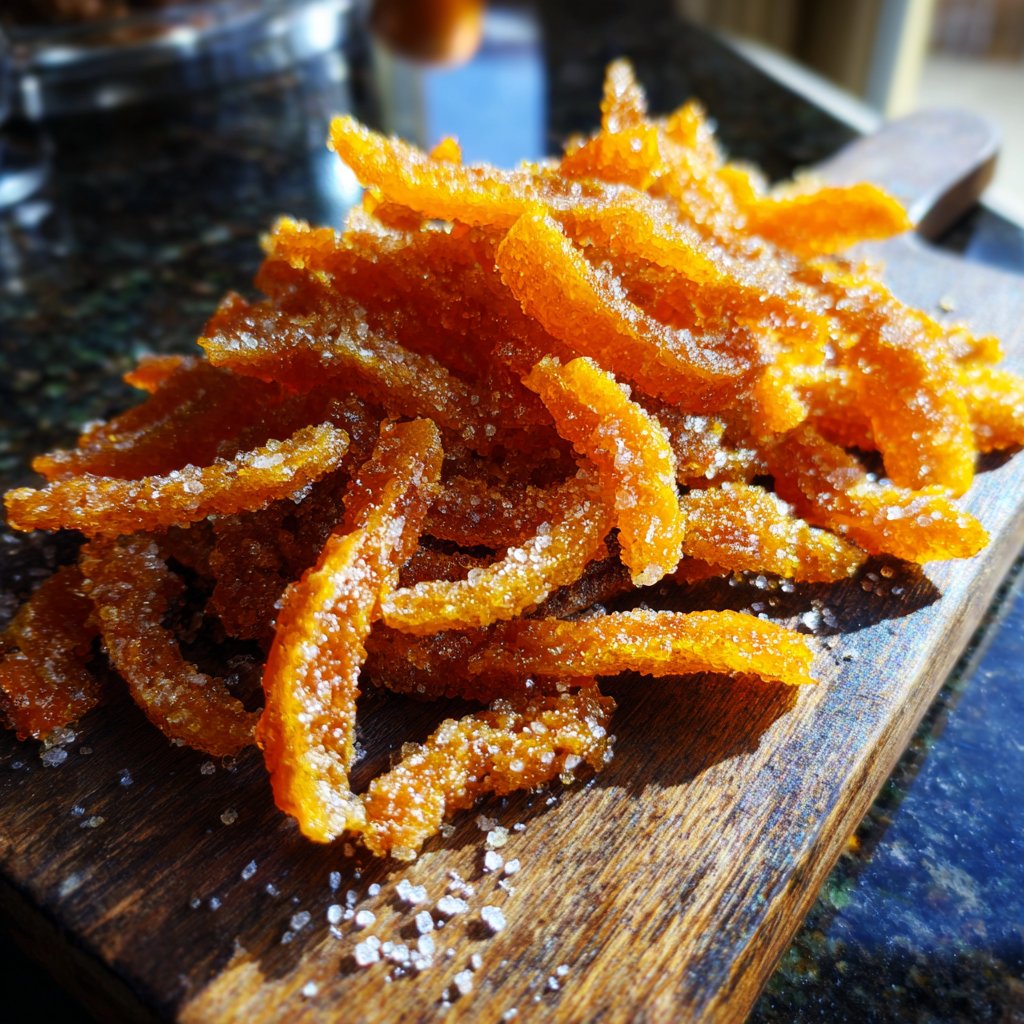
Not only are these peels delightful on their own, but I love using them to elevate my desserts, adding a pop of color and flavor. One quirky tip I discovered is to toss them in a bit of sugar right after cooking; it gives them a beautiful finish and prevents sticking!
Why You Will Love This Recipe
- Rich, sweet flavor balanced with a hint of bitterness from the orange peel
- Versatile: perfect as a snack or a dessert garnish
- Simple ingredients with impressive results
Understanding the Ingredients
The primary ingredients in this Candied Orange Peel are oranges, brown sugar, water, and salt. Choosing high-quality, ripe oranges is crucial as they not only provide vibrant flavor but also contribute to the peel's desired texture. Navel oranges are a great choice due to their natural sweetness and thicker peels, which hold up well during the candying process. Always wash the oranges thoroughly to remove any wax or residue; this enhances the final product's taste and preserves the natural oils in the peel.
Brown sugar plays a significant role in this recipe. Its rich molasses content adds depth and complexity to the syrup, creating a beautifully caramelized finish on the candied peels. If you're looking for a lighter alternative, light brown sugar can be used, but keep in mind that it will yield a milder flavor. The salt is essential as it not only balances the sweetness but also accentuates the citrus aroma, making those vibrant flavors pop.
The Candying Process
Blanching the orange peels is a critical step in reducing bitterness and improving overall flavor. This method helps extract the harsh oils from the peels, leaving behind a sweeter, more palatable candy. Ensure that you allow the peels to simmer for a full ten minutes in each boiling session. If after three rounds of blanching the peels still taste too bitter for your liking, feel free to add an additional round, adjusting the boiling time as necessary.
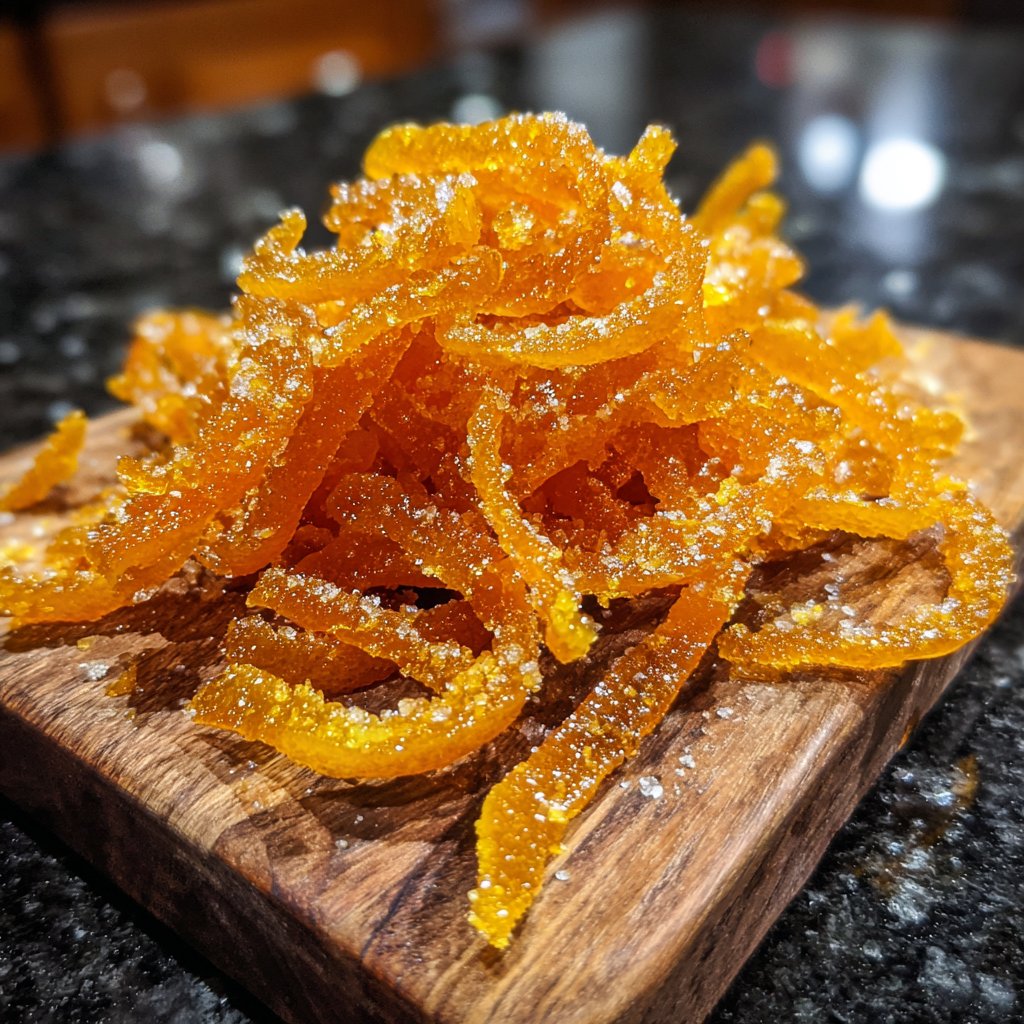
When candying the peels, maintaining a low heat during the simmering stage is vital. Aim for a gentle boil; excessive heat can cause the syrup to caramelize too quickly, potentially leading to overly sticky or hard results. You’re looking for the peels to become translucent and glossy, indicating they’re effectively absorbing the syrup. Stirring occasionally helps ensure even coverage and prevents the peels from sticking together.
Ingredients
Gather the following ingredients before you start making your candied orange peel:
Ingredients
- 4 large oranges
- 2 cups brown sugar
- 1 cup water
- 1/4 teaspoon salt
Make sure to properly wash your oranges to remove any wax or pesticides before using them.
Instructions
Follow these steps to create your delicious Candied Orange Peel:
Prepare the Oranges
Wash the oranges thoroughly. Cut the tops and bottoms off, then cut the oranges into quarters. Carefully remove the flesh from the peels without damaging them. Slice the peels into thin strips.
Blanch the Peels
Place the orange peels in a pot of boiling water. Boil for 10 minutes, then drain and rinse under cold water. Repeat this process two more times to reduce the bitterness.
Make the Syrup
In a saucepan, combine brown sugar, water, and salt. Bring to a gentle boil over medium heat, stirring until the sugar has dissolved.
Candy the Peels
Add the blanched peels to the syrup. Reduce the heat and simmer for 30 minutes, stirring occasionally, until the peels are translucent.
Cool and Store
Remove the peels from the syrup and place them on a cooling rack. Once cooled, you can toss them in a bit of sugar if desired. Store in an airtight container.
Your homemade candied orange peel is now ready to enjoy!
Pro Tips
- For added flavor, consider adding a splash of vanilla extract or a pinch of cinnamon to the syrup while cooking the peels.
Storage and Shelf Life
Once cooled, store your candied orange peels in an airtight container to keep their texture intact and prevent them from drying out. If properly stored, they can last for up to two weeks at room temperature, but they may retain their freshness longer if kept in the refrigerator. If you want to prolong their life even more, consider freezing them. Spread the cooled peels on a baking sheet to freeze individually before transferring them to a resealable freezer bag; they can last for several months in the freezer.
For optimal quality, always check for any signs of spoilage before using your candied peels. If they become hard or lose their sheen, they may not be as enjoyable, but you can use them in baked goods or blended into smoothies for added flavor.
Serving Suggestions
Candied orange peels are incredibly versatile and can elevate a variety of desserts. Try using them as a garnish on cakes, cupcakes, or even chocolate desserts for a sophisticated touch. Their beautiful color and shiny texture draw the eye and add an aromatic flavor profile that complements many sweet dishes. You might also incorporate them into homemade granola or trail mix for a delicious and unexpected twist.
For a delightful treat, feel free to dip the candy in chocolate after they’ve cooled completely. Dark chocolate pairs wonderfully with the citrus, offering a delicious balance of flavors. Whether enjoyed as a standalone snack or as an ingredient enhancing your favorite recipes, candied orange peel will undoubtedly bring a burst of sunshine to your table.
Questions About Recipes
→ How long do candied orange peels last?
They can last up to two weeks if stored in an airtight container in a cool, dry place.
→ Can I use lemon or lime peels instead?
Yes, lemon and lime peels can be candied in the same way; they will have a different flavor profile.
→ What can I do with leftover syrup?
The syrup can be used to sweeten drinks or drizzled over desserts for added flavor.
→ Are candied peels healthy?
While they offer some nutrients from the fruit, they are high in sugar and should be enjoyed in moderation.
Candied Orange Peel with Brown Sugar
Created by: The Chefmarcocooks Team
Recipe Type: Easy Desserts | Simple Baking
Skill Level: Intermediate
Final Quantity: Approximately 1 cup
What You'll Need
Ingredients
- 4 large oranges
- 2 cups brown sugar
- 1 cup water
- 1/4 teaspoon salt
How-To Steps
Wash the oranges thoroughly. Cut the tops and bottoms off, then cut the oranges into quarters. Carefully remove the flesh from the peels without damaging them. Slice the peels into thin strips.
Place the orange peels in a pot of boiling water. Boil for 10 minutes, then drain and rinse under cold water. Repeat this process two more times to reduce the bitterness.
In a saucepan, combine brown sugar, water, and salt. Bring to a gentle boil over medium heat, stirring until the sugar has dissolved.
Add the blanched peels to the syrup. Reduce the heat and simmer for 30 minutes, stirring occasionally, until the peels are translucent.
Remove the peels from the syrup and place them on a cooling rack. Once cooled, you can toss them in a bit of sugar if desired. Store in an airtight container.
Extra Tips
- For added flavor, consider adding a splash of vanilla extract or a pinch of cinnamon to the syrup while cooking the peels.
Nutritional Breakdown (Per Serving)
- Calories: 200 kcal
- Total Fat: 2g
- Saturated Fat: 0g
- Cholesterol: 0mg
- Sodium: 40mg
- Total Carbohydrates: 50g
- Dietary Fiber: 3g
- Sugars: 45g
- Protein: 1g